I have been giving presentations and writing blog posts about in-company training for the last several years. Especially with the presentations, I often have problems trying to fit the content to the audience. The problem is that I am facing two separate market segments... in-company trainers (often freelancers) who typically have much greater scope in determining needs, selecting/creating materials and delivering training. But also in the audience are the Business English teachers and lecturers who have less control over the learning objectives, resources and methods. Additionally, they face drastically different challenges concerning learner motivation, class size and assessment/reporting. Not having experience operating in such a formal structure, I'd like to pass on some thoughts on what I see as those students enter the workforce and perhaps reflect on where I could see changes in institutional teaching.
Despite being in-company, I actually receive many pre-experienced learners. My training is often aligned with the company's on-boarding program and the majority of new participants are in their first days or weeks at the company. It is also normal for me to get participants who do not use English in their jobs yet, but it is coming. In these cases, I feel I can relate somewhat to the challenges teachers face with pre-experienced learners.
I can draw several conclusions from what I see as these participants enter my training.
1. Learners who had an English course which was aligned with their field of study had great advantages over those who only had a general Business English class.
2. Motivation was much higher for learners who clearly understood that a) English would certainly be a integral part of their job and b) being able to conduct their job in English would be a competitive advantage for career progression. Those who lacked this awareness were surprised by the reality of a bilingual working environment and suffered lower self-confidence. They often had negative feelings toward improving their language.
3. If an institution taught English as a practical skill, their graduates were much better prepared. If the school treated English as a theoretical concept, the graduates were largely unable to adequately perform their tasks in L2. This mindset was often reflected by the teaching methods and content. Practical teaching focused heavily on production activities throughout the teaching, not just at assessment. Unsurprisingly, those who emerged from a more theoretical approach were often overwhelmed by the apparent complexity of the language.
Let me give you examples of things going wrong. You might be surprised at how often I am faced with entry-level accountants who cannot recognize the basic vocabulary from a balance sheet (almost zero new graduates). Likewise, I routinely meet fresh-faced employees in the mechanical engineering field who cannot understand even the simplest terms like bearing, dimensions, or bolt. I see this across fields with the exception of software. I suspect that is because software terms have been developed in conjunction with the spread of English, they have an advantage because they often do not have L1 equivalent words. However, you can see how wholly unprepared some of these learners are for performing their job in English.
Of course, I do not want to lump all educational institutions together. There are many very good programs which are producing excellent international employees. But the results appear to be hit or miss. The one area in Germany which seems to be particularly poor is the apprenticeship path. And this leads to a few observations about the content-need mismatch.
First, students and apprentices need English at a tactical level. If course books reflect the nature of educational teaching, the content is far too managerial and strategic. Even university graduates are entering the work force at a low level in the organization structure. Most English communication at this level is problem oriented. Companies have automatic processes/workflows and IT systems to handle routine tasks. If everything runs as it should, very little communication is needed. However, when the system breaks down, communication is needed to get back on track. For example, missed deliveries, higher costs, missing files, incomplete reports, etc. are at the heart of communication. New employees are not generally making business plans, discussing how to foster entrepreneurship in the company, devising a market campaign, or discussing who to promote and why. Even among high-flyers, the company will not hand this much responsibility to a new employee from day one. They typically have a separate development path in the company, but still deal with tactical matters at the beginning.
Second, far more English communication occurs internally or semi-internally than with customers. Evan Frendo is right on the money with this observation and I cannot stress this point enough. Most companies have strict communication filters between themselves and the customer. In many cases, all external communication must go through a very small team in the corporate communications, marketing or sales departments. There are a few exceptions to this, but they are all highly specialized. For example, the customer service department speaks with customers, as will the accounting department in case of wrong invoices. By and large however, entry-level employees are kept at arms length from the customer. More English communication occurs semi-internally. In this case, the employee needs to work with long-term suppliers or distributors. While the communication is often between two companies, they work together so often and so deeply that they could almost be regarded as colleagues. But by far, the most communication is internal - from department to department. It is generally the consequence of off-shoring and outsourcing which are also the main reasons why English is needed so badly at lower echelons in the company. A typical situation might be an email between the quality auditor in the home country and the factory in Romania. Another example is the software developer in India and the tester in Germany.
Third, communication is highly transactional, but... it is far more complex that "Could you please...?" I hear all the time from new participants that they want to improve "small talk". When I scratch beneath the surface however, I find that what they really want is the ability to build relationships with their international contacts to ease the transactional nature of business. They want to build trust with their global colleagues and suppliers. The second aspect of communicating in companies is that students enter a high-context culture. Office discourse is so difficult because of the body of shared knowledge, differing objectives and the hierarchical structure of decision-making and information flow. While the email may be a simple request for clarification on the surface, the context can quickly land the employee in hot water. I'm not sure this second aspect can be dealt with in education, but the teacher may want to keep it in mind.
So, what do I recommend?
1. Create a balanced English program - one-third general English, one-third general Business English, one-third field specific "ESP Lite". General English is important and under represented in the secondary schools (at least in Germany). From the ages of 12-16, English is taught resembling CLIL. Looking through the state school books, there is a chapter on Australia, the Big Apple, and reading about Obama's election. I can distinctly remember helping a friend's child try to learn the words, abolition, underground railroad, whip, and quilt. Can you imagine the topic? I don't want to exaggerate, nor do I wish to insult school teachers at all. I merely want to point out that some of the content prior to entering university is of marginal value in business socializing. Also, by the time they enter the workforce years later, they often lack the simplest vocabulary to discuss their weekend. I think ongoing general English learning would be very helpful. I also think that general Business English is helpful as a foundation up to the intermediate level. The problem with higher levels is the content of the course book. Course books are generally organized by field: one chapter on HR, one on projects, one on marketing, etc. This works up to B1-B2 but then they become overly specific in the fields. I think "ESP Lite" would be extremely helpful. This will help the students prepare for the next steps.
2. Take a step back from standardization. I understand that a certain level of standardization is needed in an institutional environment. However, I also observe that university level Business English teachers are an incredibly talented and professional group. When I present at BESIG conferences, this is the group which makes me the most nervous because of their knowledge, expertise and experience. I periodically lead standardized training with larger classes, but I always work under a very general set of can do statements. Within the statement is enough room for me to maneuver. I am able to conduct a modified needs analysis to refine the training. The more detailed the can do statement, the more we rely on the institution's needs analysis. In others words, the can do statement (and thus the assessment) had better be relevant or else we are wasting everyone's time. I'm just thinking out load, but do these expert university teachers really need a step-by-step lesson plan with page numbers and activity types?
3. Fortify the feedback loop from practice to content. I currently have the suspicion from my pre-experience learners that many need analysis are conducted in Oxford, Cambridge or in the halls of Pearson Education. Instead, I recommend shortening the feedback loop by drawing on a few resources. Most institutions have a career placement program to help students transition to careers. Where are graduates going? What are they doing? If a job is unfamiliar, read example job descriptions or visit the US Department of Labor Occupational Handbook for more. Another idea is to build a relationship with HR groups and/or in-company Business English trainers in the area to get feedback. For example, did you know that presentations are often much different in technical fields? First, PowerPoint slides need more text because they must be clear without a verbal presentation. The slide decks can travel far in the company without any meeting or spoken communication at all. Second, verbal presentations are typically less than 5 minutes long and the most common visual aid is an Excel spreadsheet. A presentation given in 'ELT format' is completely irrelevant.
In conclusion, I want to be very clear that my observations about the challenges in Business English teaching cannot possibly reflect every institution and every teacher. However, I have questions based on the number of participants I see entering the workforce without the ability to conduct even the most routine tasks in their field. Their brains are full of valuable knowledge and ideas, but they are locked behind the bars of language and skills. I hope that my thoughts add something to the pre-experienced vs. experience learner discussion and I look forward to hearing your feedback.
Showing posts with label Germany. Show all posts
Showing posts with label Germany. Show all posts
Sunday, June 15, 2014

Thursday, August 29, 2013
So, you want to teach Business English in Germany...?
Herzlich Willkommen! You will find teaching in Business English in Germany exciting and rewarding, I'm sure. But beware, its not all lessons in the Biergarten. Here are ten things to help you work in Germany.
1. German is a very hard language
There is a saying in German "Deutsche Sprache, schwere Sprache," which translates to "German language, difficult language." Recently, football club Bayern Munich hired Pep Guardiola, the spanish legend, as their new coach. He was hired roughly six months before he was to take on the position and was living in New York. During that time he took German lessons to prepare for his new job. He now gives interviews and leads press conferences in German. In comparison, it took Franck Ribery nearly five years in the league to give his first interview in German.


So, you are likely to have classes in which the learning expectations are completely different. One part of the class would prefer maximum speaking time and very little structured input. The other part expects maximum teaching input and clearly structured practice activities. Finding a middle can be a challenge and requires a certain bit of finesse. Sometimes this means having clearly defined conversation and input driven lessons. Sometimes this means teaching them about second language acquisition and methodology. Sometimes this means changing people's minds about learning.
3. German employees don't do homework
Clocking in and out at work is much more than an administrative task for German employees, it is symbolic ritual which signifies their distinct separation between work and personal lives. Only the most dedicated students will do homework. Typically you can use homework to distinguish goals. Those who see English as a benefit for their personal happiness will do homework. Those who see English only as a necessary tool for their work will not.
I wrote about this topic last year and I believe my previous post is still accurate, but the effects are limited. Even with the most elaborately planned tasks and persuasion, I can still only get about 50% completion of homework.
This limits the trainer in many ways. First, multi-session lessons are difficult to pull off. Starting a topic in one lesson and continuing for weeks is a challenge. Second, the flipped classroom is largely impossible. Imagine assigning background reading for a lesson and then having one student complete it. Third, more elaborate skills training is questionable. I still typically assign presentation to my classes but I rarely have more than 75% actually create and deliver the presentations. Fourth, vocabulary practice is almost zero. If they need to increase vocabulary, it is best to limit the aims of the face-to-face lesson and hammer the words during the lesson.
4. Verb tenses are a bitch (yup I used that word)
Judging by the coverage of verb tenses in international course books and websites, I'm sure that Germans are not alone. But I have seen some interesting aspects of learning verb tenses among my learners.
First, they are obsessed with them. For many grammar = verb tenses (called 'times' in German). I can almost guarantee that you can walk into any German classroom, ask about their needs, and verb 'times' will come up. Add in the grey areas I mentioned above and you have room for chaos. Add in the 'magic wand' student to the mix and you have a recipe for disaster.
Second, their school teacher confused the hell out of them. It is a useful exercise for a teacher in Germany to do a little tutoring for a while to get an idea of how they learn English in the schools. English is now taught starting in the fifth grade (and sometimes vocab is taught earlier). In the sixth grade it gets serious. In the first three years of school English, the students are ask to master the Present Simple, Present Continuous, Past Simple (called the Simple Past in Germany), the Present Perfect, the Present Perfect Continuous, the Past Continuous, and the four future forms. In year four, they are hit will the Past Perfect, Past Perfect Continuous and the future perfect forms.
A normal school year has 37 weeks with about 2 hours of English per week. If we throw in testing (written and verbal), we are down to about 60 hours per year of class time. Imagine trying to teach all 12 verb tenses (plus passives) in 240 hours. Holy cow! No wonder they are confused. Adding to the issue is the fact that students often believe, for example, that the Past Perfect is just as important as the Past Simple. After all, it was taught with the same emphasis in school. I've even had students come to class proud to show me a table they made of all twelve verb tense forms plus passive.
So, here are some of my recommendations for teachers. First, limit the number of tenses you cover in class but make sure they understand when to use them. Second, expect interesting sentences. The Present Perfect is, of course, the bugbear for Germans (the same form has a different meaning in their language). But interestingly, they will be hesitant to use the Present Continuous while at the same time overusing the Past Continuous. Third, spend considerable time on the future forms. The prevalence of going to, will, and the present continuous for the future warrants a look. Germans don't normally use a modal or verb form for the future so will be uncomfortable with it. Finally, the difference in meaning is important enough to examine in class. I have developed special ways of teaching these verb tenses to fit my learners... I encourage you to look at your methods.
5. They are amazed that German and English are related
I don't know why but my student never seem to see how German and English are related. There are so many words which are the same or nearly the same in the two languages. Be prepared for questions like, "What mean organisieren in English?" or surprised faces when you say "Bratwurst is Bratwurst in English." I guess Bier and beer doesn't quite do it.

Okay, this is not quite true, but register in German hinges on three things: filler words, pronunciation and personal pronouns. There are certain domain specific words like darüberhinaus (moreover) which are used in a super formal register, but for the most part Germans do not change words to change register. For a German learner it is interesting to translate everyday spoken German to see register contradictions in English. For example, "Dude, did you obtain the confirmation for your residency visa?" or "Listen man, the requirements are totally confirmed."
One element of German is that distinct concepts have distinct vocabulary. The same it true of English, but they are actually used in everyday German. My four-year-old son routinely produce sentences with vocabulary which, when directly translated, would sound like a lawyer. "I have consistently demanded that my brother stop hitting me!"
Register in German is primarily determined by eliminating regional dialect and speaking 'high German' (Hochdeutsch). Primarily, this means removing regional filler words like fei, gell, echt, and na. This also means reducing the dialect pronunciation. Where I live, for example, /p/ and /b/ are pronounced the same (soft /p/), they same is true for /t/ and /d/ (soft /t/). When they change register, they pronounce them correctly.
For the teacher, this poses a problem. You will have to teach the students that the deciding factor for register in English is word choice. I typically start by saying, "Okay, in German you change the pronoun 'you' (Sie and du). In English, we change everything else in the sentence." But most learners equate 'informal' English with 'unprofessional' English. In some cases this is true, but in nearly all cases, the learners simply do not have the lexis to speak unprofessionally. For example, I've never met a student who can produce the sentence, "Dude, I'm like totally stoked about this presentation!"
7. Pronunciation is not a huge problem
When we think of German speakers we often attach the convenient Arnold Schwarzenegger accent. But I find that phoneme pronunciation is not a major problem. Sure, some work on the /th/ sounds is needed to keep them from sinking about sings. And at the very beginner level water can sound like vater. 'Were' is often a beginner issue at well. But for the most part, students sort these individual sounds out quite quickly. In fact, I am often impressed at how my students handle the quintessential problem areas like 'through' and 'enough'. Plus, long words can be tongue twisters. Here is a list of words which nearly always cause problems.
1. German is a very hard language
There is a saying in German "Deutsche Sprache, schwere Sprache," which translates to "German language, difficult language." Recently, football club Bayern Munich hired Pep Guardiola, the spanish legend, as their new coach. He was hired roughly six months before he was to take on the position and was living in New York. During that time he took German lessons to prepare for his new job. He now gives interviews and leads press conferences in German. In comparison, it took Franck Ribery nearly five years in the league to give his first interview in German.
The commentary in the press routinely praises Pep for his amazing achievement. His German is B2 level when he is fully prepared, A2 when answering spontaneously (my evaluation). I have never heard criticism about Franck taking so long to adopt the language... after all it is very difficult.
In reality, it is not that difficult to learn. To be sure, the gender pronouns cause considerable problems (der, die, das) and the problem is compounded because they affect adjectives. Additionally, the Accusativ, Dativ, and Genetiv cases can be confusing, especially when dealing with prepositions. In some cases, the resulting grammar makes no logical sense. However, the German language has a set of fixed rules, which when learned, never change. There are very few exceptions to the rules and with proper study (and some memorization) the levels become easier as you go along.
Of course, English is the exact opposite. There is a lot grey area in English grammar. This something that takes some getting used to. My students are dumbfounded when I tell them, "Well, both are correct." I often have to explain the difference between prescriptive and descriptive grammar. Recently, the Süddeutsche Zeitung ran and article on English as Lingua Franca and said English grammar is "rudimentary". In short, Germans are often looking for rules when there are none and continually frustrated by exceptions (which abound). They are surprised to find that we don't have a Duden, an official guide to correct German usage, upon which to evaluate correctness.
Some students will directly say that British English, in particular Oxford English, is correct. This also includes received pronunciation. While they have a point, focusing on this type of English may not have the most practical use.
So, in the end, I am not surprised at Pep Guardiola's achievement. In fact, I would expect better from six months of classes (presumably one-to-one and intensive) with a crystal clear needs analysis. German students, however, are often surprised at the difficulty of English as they improve. It is a good idea to provide learners with 'guidelines' rather than 'rules' when necessary and use activities which teach a better feeling for the language rather than simply correct and incorrect. When doing this, however, be prepared for resistance.
2. Germans have two conflicting learning settings
If you start of a new class by outlining expectations for a course, you will probably be confronted with two very different methods of teaching. The first is "learning by doing". The students just want to talk. They are often completely satisfied with a conversation class punctuated by some corrective and lexical feedback from the teacher. The "bring in an article, read and discuss" lesson plan meets these expectations nicely and is even recommended by the students occassionally.
In the book "Der, die, was? Ein Amerikaner im Sprachlabyrinth" the author David Bergmann humorously tells the story of learning German and it's idiosyncrasies. In the book he mentions advice from Germans to "simply speak"... that is the best way to learn. He compares this with learning a piano concerto by simply sitting down and starting to play. Yet, many of your students will undoubtedly think that they can magically improve their language without any input or focused practice.

Along with this is the 'common knowledge' that you can only truly learn a language through immersion. Occasionally, I counter this by presenting research which shows only mixed results for total immersion without a guide. I also relate my own story about living in Germany for seven years without teaching. My vocabulary was quite large but when I started lessons, I was still placed in the A1 group because I didn't understand even the most basic aspects of syntax and grammar.
As a result, one of the most important lesson to pass on to German students is 'noticing' the language around them. Your students will certainly have a range of English exposure through news, television and signage (not to mention daily business). Yet they rarely notice these words and I'm constantly surprised when they don't know an English word which is commonplace in German media.
The second learning method, which is less common, is the 'magic wand' learner. These are the students who come to classes with the mistaken belief that somehow the teacher will transform them into English speakers through no effort of their own. I believe this stems from their school experience in which English was often taught by lecture. The teacher talks, the student listens, the student takes a written test to prove their knowledge. This method has evolved in German schools now, but adult learners still carry this baggage.
This means that students might question (sometimes directly) the purpose of an exercise/class activity. For example, guided discovery grammar teaching is unsuitable. I've had students simply refuse to do the activity because they didn't see the point. After all, the teacher's job is to teach, the pupils' job is to listen and learn. So, sometimes it is best to clearly and directly state the pedagogical reason for a certain activity. "This activity is designed to..."
3. German employees don't do homework
Clocking in and out at work is much more than an administrative task for German employees, it is symbolic ritual which signifies their distinct separation between work and personal lives. Only the most dedicated students will do homework. Typically you can use homework to distinguish goals. Those who see English as a benefit for their personal happiness will do homework. Those who see English only as a necessary tool for their work will not.
I wrote about this topic last year and I believe my previous post is still accurate, but the effects are limited. Even with the most elaborately planned tasks and persuasion, I can still only get about 50% completion of homework.
This limits the trainer in many ways. First, multi-session lessons are difficult to pull off. Starting a topic in one lesson and continuing for weeks is a challenge. Second, the flipped classroom is largely impossible. Imagine assigning background reading for a lesson and then having one student complete it. Third, more elaborate skills training is questionable. I still typically assign presentation to my classes but I rarely have more than 75% actually create and deliver the presentations. Fourth, vocabulary practice is almost zero. If they need to increase vocabulary, it is best to limit the aims of the face-to-face lesson and hammer the words during the lesson.
4. Verb tenses are a bitch (yup I used that word)
Judging by the coverage of verb tenses in international course books and websites, I'm sure that Germans are not alone. But I have seen some interesting aspects of learning verb tenses among my learners.
First, they are obsessed with them. For many grammar = verb tenses (called 'times' in German). I can almost guarantee that you can walk into any German classroom, ask about their needs, and verb 'times' will come up. Add in the grey areas I mentioned above and you have room for chaos. Add in the 'magic wand' student to the mix and you have a recipe for disaster.
Second, their school teacher confused the hell out of them. It is a useful exercise for a teacher in Germany to do a little tutoring for a while to get an idea of how they learn English in the schools. English is now taught starting in the fifth grade (and sometimes vocab is taught earlier). In the sixth grade it gets serious. In the first three years of school English, the students are ask to master the Present Simple, Present Continuous, Past Simple (called the Simple Past in Germany), the Present Perfect, the Present Perfect Continuous, the Past Continuous, and the four future forms. In year four, they are hit will the Past Perfect, Past Perfect Continuous and the future perfect forms.
A normal school year has 37 weeks with about 2 hours of English per week. If we throw in testing (written and verbal), we are down to about 60 hours per year of class time. Imagine trying to teach all 12 verb tenses (plus passives) in 240 hours. Holy cow! No wonder they are confused. Adding to the issue is the fact that students often believe, for example, that the Past Perfect is just as important as the Past Simple. After all, it was taught with the same emphasis in school. I've even had students come to class proud to show me a table they made of all twelve verb tense forms plus passive.
So, here are some of my recommendations for teachers. First, limit the number of tenses you cover in class but make sure they understand when to use them. Second, expect interesting sentences. The Present Perfect is, of course, the bugbear for Germans (the same form has a different meaning in their language). But interestingly, they will be hesitant to use the Present Continuous while at the same time overusing the Past Continuous. Third, spend considerable time on the future forms. The prevalence of going to, will, and the present continuous for the future warrants a look. Germans don't normally use a modal or verb form for the future so will be uncomfortable with it. Finally, the difference in meaning is important enough to examine in class. I have developed special ways of teaching these verb tenses to fit my learners... I encourage you to look at your methods.
5. They are amazed that German and English are related
I don't know why but my student never seem to see how German and English are related. There are so many words which are the same or nearly the same in the two languages. Be prepared for questions like, "What mean organisieren in English?" or surprised faces when you say "Bratwurst is Bratwurst in English." I guess Bier and beer doesn't quite do it.

I have also never met a German student who was not fascinated by loan words. In fact, you can base an entire lesson on words like Schadenfreude, Kindergarten, and Zeitgeist. I tend to think they few this patriotic revenge for all the English words they have adopted such as 'Shitstorm', 'Handy', 'Mobbing' and 'entertainment'. The first three fit nicely into the loan word lesson because they have different meanings or usage.
But in essence, my students routinely fail to see the parallels between German and English. This makes translation exercises particularly useful in the classroom. For example, Germans are often confused by the second conditional because it uses the past tense. First of all, I have decouple the form from time (handled in the verb tenses lessons) and then I can show them how it has a close cousin in German. German has a rarely used, but widely known, subjunctive form which corresponds closely to the German preterite form (Past Simple). Suddenly, when they see Old German matched with English they see the connection. By the way, most schools do have lessons on Old German.
6. There is only one register in German
Okay, this is not quite true, but register in German hinges on three things: filler words, pronunciation and personal pronouns. There are certain domain specific words like darüberhinaus (moreover) which are used in a super formal register, but for the most part Germans do not change words to change register. For a German learner it is interesting to translate everyday spoken German to see register contradictions in English. For example, "Dude, did you obtain the confirmation for your residency visa?" or "Listen man, the requirements are totally confirmed."
One element of German is that distinct concepts have distinct vocabulary. The same it true of English, but they are actually used in everyday German. My four-year-old son routinely produce sentences with vocabulary which, when directly translated, would sound like a lawyer. "I have consistently demanded that my brother stop hitting me!"
Register in German is primarily determined by eliminating regional dialect and speaking 'high German' (Hochdeutsch). Primarily, this means removing regional filler words like fei, gell, echt, and na. This also means reducing the dialect pronunciation. Where I live, for example, /p/ and /b/ are pronounced the same (soft /p/), they same is true for /t/ and /d/ (soft /t/). When they change register, they pronounce them correctly.
For the teacher, this poses a problem. You will have to teach the students that the deciding factor for register in English is word choice. I typically start by saying, "Okay, in German you change the pronoun 'you' (Sie and du). In English, we change everything else in the sentence." But most learners equate 'informal' English with 'unprofessional' English. In some cases this is true, but in nearly all cases, the learners simply do not have the lexis to speak unprofessionally. For example, I've never met a student who can produce the sentence, "Dude, I'm like totally stoked about this presentation!"
7. Pronunciation is not a huge problem
When we think of German speakers we often attach the convenient Arnold Schwarzenegger accent. But I find that phoneme pronunciation is not a major problem. Sure, some work on the /th/ sounds is needed to keep them from sinking about sings. And at the very beginner level water can sound like vater. 'Were' is often a beginner issue at well. But for the most part, students sort these individual sounds out quite quickly. In fact, I am often impressed at how my students handle the quintessential problem areas like 'through' and 'enough'. Plus, long words can be tongue twisters. Here is a list of words which nearly always cause problems.
- clothes
- debt
- negotiate
- unfortunately
- graduate (both noun and verb)
- photographer (my wife is one, so we find this often in my lessons)
- apprenticeship
But for the most part, individual word pronunciation is quite good.
The main problem is sentence level pronunciation. This is also, sadly, the area which teachers are least prepared to handle. While the words are said correctly, be prepared for the 'German machine gun', bang-bang-bang-rat-tat-tat-tat. You may even find that your students look at you questioningly when you go over short forms. Expect revolt when you bring up wanna, gonna, and gotta.

Why? Well, read number 6. German register is typically defined by clear pronunciation. Teaching them short forms is equivalent to teaching them 'bad English'. Add in a few 'Oxford English is the right way' students and I hope you can find the explanation out of the mess you created.
Also, Germans are hesitant to show emotion through intonation. They will use intonation frequently to avoid difficult question forms (for example... You live in Munich?) but will not be prepared to pause after adverbs of commentary. But this general lack of emotion while speaking fits with the next point.
8. Communication skills are mediocre to poor
Yup... I said it. I'm sorry Germany... but your overall communication ability is below average. You write poor emails, deliver boring presentations, and write indecipherable documents. In most cases I trace this back to the education system and the German language. As some of you may know, Germans do not receive a 'liberal education'. They get a very basic background in humanities up to age 16 before they move on to subject specific practical skills.
University graduates are often the exception, but less than 20% of all high school graduates attend university. In addition, you are not likely to find them in your classes because their English is typically at least business survival level, in most cases verhandlungssicher (able to discuss = proficient).
This means that the car mechanic is totally amazing at fixing cars but horrible at talking to customers. Taking it a step further, the engineer (through technical school) knows everything about the technology but pisses all his international colleagues off with his emails. Of course, I am making stereotypes just as others make them about pronunciation, but there is a certain amount to truth here. As a teacher, you may have to point to the long-term benefits of relationship building at the expense of short-term clarity.

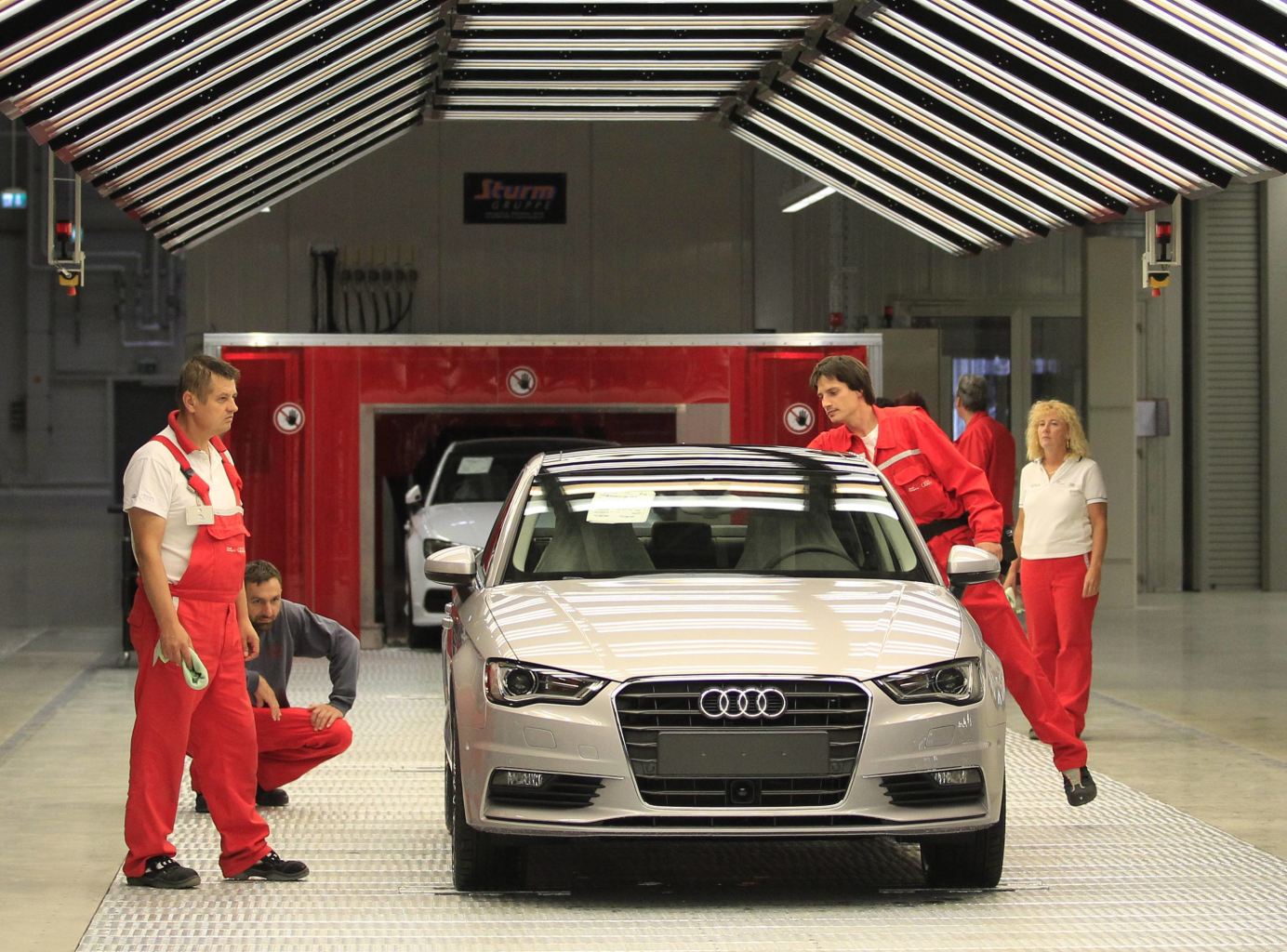
To be honest, this is difficult line to walk as a trainer. Most certainly there are cases in which direct words are needed. American and British communication trainers are often confronted by the opposite, conflict and directness is avoided at all costs, resulting in unclear expectations. But there is a middle ground here, and the trainer in Germany should seek to find it. When it comes to leading meetings and giving presentations, there are certainly tips which constitute best practice. Most of your students will be unfamiliar with them, both in theory and in practice.
9. They appreciate the outsider's point of view
Germans are crazy about feedback. This includes everything from their language to their country to their culture. However, I have noticed that they prefer for it to be delayed until they are finished speaking. Interruption is generally taboo, both mid-sentence and mid-story. For linguistic mistakes and gaps, it is generally best to record and highlight later. Most of my students prefer seeing their language written and improved rather than hitting them mid-stream. To be honest as learner, so do I.
The second thing is about differences in opinion. Occasionally I have lessons in which one of the student takes the discussion off on an anti-American tangent (there are ample opportunities for this). The NSA data security issue has been the latest in string of possible 'What the hell is America thinking?' subject. Gun control was the topic of the spring. The presidential election was last fall. But no matter if it is political or simply about the best way to organize a to-do list, differences of opinion will appear in your lessons.
I have found that no matter how integrated I am in Germany (in fact that helps me build extraordinary trust), I am still the outsider in the room. They count on me to bring in viewpoints from outside their world. In fact, a simple way to change the dynamic of the classroom from me asking them questions is to get them to ask me about America, the world, and how we see Germany. This particularly suits the 'learning by doing' expectations of learners and as long at the teacher watches the talking time, can make for a productive lesson.
For example, most Germans are surprised to learn that "Made in Germany" actually means what they think around the world. They are surprised by the American fascination with the Autobahn and Mittelstand. They rarely think about punctuality until it is in the context of another culture. Likewise, they are truly confused by the concept of patriotism and how it affects worldview.
As I've mentioned in intercultural training posts before, it would be a good idea for the trainer to understand the underlying values of German culture before trying to discuss these issues. Perhaps I'll blog about this in the future, but the key is to stop using utilitarian reasoning and check out some rights-based ethics. Objectivity to key and truly appreciated. No one appreciates criticism from an outsider, but an objective evaluation is interesting. I find that Germans are intrigued by neutral analysis and have some kind of underlying desire to be evaluated.
10. Germany is not a nation, it is collection of similar regions
Following the previous point, it helps a teacher in Germany to understand which region he/she is in. Each holds its own traditions and culture which are preserved with pride. I mentioned patriotism above, which will generally be foreign to most of your learners. For them patriotism is generally about cheering for the German national team at the World Cup. After the two months is over it is back to those "shit Bavarians". Likewise, Bavarians think everything northwest of Frankfurt is the Ruhr area, an industrial wasteland of welfare recipients and broken down societal systems.
There are many reasons why stereotypes and rivalries exist in Germany, some going back centuries. It may be too much to ask for a trainer to dive into history and ethnography to try to understand them. But the artifacts of this are clearly visible and provide ample opportunity to fruitful lessons and discussions.
First is dialect. Picking on dialect is one of the prime sources of humor in Germany and they can talk about the differences at length.
Second is food. In Bavaria, food translates to sausage. In fact, I could hold entire lessons on the differences between bratwursts. I certainly don't look down on this. I am from Kansas City and I could describe all the minute differences in barbecue across the US and advocate clearly why KC has the best.
The third is football. The football team you cheer for says a lot about your personality. Enough said. Also, I have never met so many women season ticket holders.
Finally, we have values and beliefs. If you are new to Germany, let me give a short beliefs overview. The south is Catholic and conservative. The west is Protestant and liberal. The east is less religious (although Protestant) and focused on whichever method can fix the problems they have (population loss, unemployment, immigration, extreme nationalism). Certain cities have special attitudes. Munich is the city of snobs. Berlin is poor but sexy. There is growing tension in the media between international gentrification and true Berliners. Cologne (Köln in German) and Hamburg are the most open cities. Dortmund, Duisberg and other cities in the Ruhr area are the blue collar hubs of Germany. Stuttgart makes cars (Porsche and Mercedes) and money (large Mittelstand). The Turks are in all the main cities, each claiming to have the largest group. It is best to stay away from this issue as far as you can, especially as you may have second generation Turkish in your class.
So, for me this means that I have to balance conflicting beliefs in my classes. The majority of my learners are Franconian (a part of Bavaria, but distinctly proud of their regional identity... dare I say nation). About a quarter are immigrants from within Germany, mostly from the former East Germany. And a small percentage are from other countries who have moved to Germany for opportunity. But regional culture makes for interesting and engaging lessons. People like talking about their identity and it provides great contexts for role plays.
For example, most Germans are surprised to learn that "Made in Germany" actually means what they think around the world. They are surprised by the American fascination with the Autobahn and Mittelstand. They rarely think about punctuality until it is in the context of another culture. Likewise, they are truly confused by the concept of patriotism and how it affects worldview.
As I've mentioned in intercultural training posts before, it would be a good idea for the trainer to understand the underlying values of German culture before trying to discuss these issues. Perhaps I'll blog about this in the future, but the key is to stop using utilitarian reasoning and check out some rights-based ethics. Objectivity to key and truly appreciated. No one appreciates criticism from an outsider, but an objective evaluation is interesting. I find that Germans are intrigued by neutral analysis and have some kind of underlying desire to be evaluated.
10. Germany is not a nation, it is collection of similar regions
Following the previous point, it helps a teacher in Germany to understand which region he/she is in. Each holds its own traditions and culture which are preserved with pride. I mentioned patriotism above, which will generally be foreign to most of your learners. For them patriotism is generally about cheering for the German national team at the World Cup. After the two months is over it is back to those "shit Bavarians". Likewise, Bavarians think everything northwest of Frankfurt is the Ruhr area, an industrial wasteland of welfare recipients and broken down societal systems.
There are many reasons why stereotypes and rivalries exist in Germany, some going back centuries. It may be too much to ask for a trainer to dive into history and ethnography to try to understand them. But the artifacts of this are clearly visible and provide ample opportunity to fruitful lessons and discussions.
First is dialect. Picking on dialect is one of the prime sources of humor in Germany and they can talk about the differences at length.
Second is food. In Bavaria, food translates to sausage. In fact, I could hold entire lessons on the differences between bratwursts. I certainly don't look down on this. I am from Kansas City and I could describe all the minute differences in barbecue across the US and advocate clearly why KC has the best.
The third is football. The football team you cheer for says a lot about your personality. Enough said. Also, I have never met so many women season ticket holders.
Finally, we have values and beliefs. If you are new to Germany, let me give a short beliefs overview. The south is Catholic and conservative. The west is Protestant and liberal. The east is less religious (although Protestant) and focused on whichever method can fix the problems they have (population loss, unemployment, immigration, extreme nationalism). Certain cities have special attitudes. Munich is the city of snobs. Berlin is poor but sexy. There is growing tension in the media between international gentrification and true Berliners. Cologne (Köln in German) and Hamburg are the most open cities. Dortmund, Duisberg and other cities in the Ruhr area are the blue collar hubs of Germany. Stuttgart makes cars (Porsche and Mercedes) and money (large Mittelstand). The Turks are in all the main cities, each claiming to have the largest group. It is best to stay away from this issue as far as you can, especially as you may have second generation Turkish in your class.
 |
| One of my hangouts in Berlin during my CELTA, the Irish pub around the corner was my planning HQ. |
So, for me this means that I have to balance conflicting beliefs in my classes. The majority of my learners are Franconian (a part of Bavaria, but distinctly proud of their regional identity... dare I say nation). About a quarter are immigrants from within Germany, mostly from the former East Germany. And a small percentage are from other countries who have moved to Germany for opportunity. But regional culture makes for interesting and engaging lessons. People like talking about their identity and it provides great contexts for role plays.
So, watch out for these things I'm sure you'll have as much teaching in Germany as I do!
Bis dann...
Bis dann...
Subscribe to:
Posts (Atom)