I recently read another rant online from someone in the ESL field about rates and wages. It brought me back to the concept of value and perhaps I should repeat a few things about the business of language training.
Six weeks ago I enrolled in a one-to-one class to brush up on my German. Like many C1 learners, I was troubled by several problems. 1) I was lacking confidence in my ability to communicate in clutch business situations. 2) I was convinced that my speech and writing were littered with little grammatical errors (bestätigt). 3) Because my comprehension is nearly perfect, I knew that my active vocabulary range was quite small.
The trainer is probably earning €20-27 per 'teaching hour' or €27-36 per normal hour. Quick caveat... Can you stop the 'teaching hour' pricing? Why do we make our customers use a calculator? Anyway, I am paying between €45-60 per hour (I'd prefer not to give the price exactly). This means the school is keeping about 40% of the payment. This is reasonable to me considering the service it provides.
But as the customer, I am not really focused on the price per hour, I am focused on the overall results of the course.
The price for my twelve lessons is €950-1300 (including VAT). Will that price solve my three problems? No, it won't. I will hopefully solve two. After six lessons, I notice that my confidence has improved. I'm actively trying to use more German in more difficult situations and I have learned a few collocations. But what else could I do with that money? If I gave you €1000 for professional development, what would you do?
Let's take this to the next level and assume I wanted to improve by two CEF levels. We'll stick with a one-to-one setting, I could probably achieve a CEF level in 70 hours. (Yes, I know not all levels take the same amount of time, but stay with me here). That would cost €7000-8000. If I were a true beginner then I might expect to pay over €15,000 to learn German, which is more than the price of a Bachelor's degree at a private university in Germany. Naturally, I would probably join a group course to effectively share the cost but I would still have to pay at least €4000.
Learning a language takes a long time to achieve results and this puts pressure on prices.
But there is a positive here and it is one we should not forget. Our contracts are long, which makes planning much easier. It is not unusual for us to look at contracts which run for years. In comparison with soft skills trainers, this is huge advantage. Their contracts run only a few weeks - often numbered in a few hours. This means they spend considerably more time doing the 'unpaid' work of marketing and networking to try and land new clients.
On the other hand, the reason they are able to obtain higher hourly rates is because the return on investment is much faster. A two-day workshop on effective presentations or team building leads to a nearly instantaneous change in behavior, hopefully. This is something we simply cannot achieve.
Combining 'quick-return' services with longer-term language training is the way to higher rates.
I am always delighted by conference presentations which ring-fence services, typically to protect their own rates or status. Have you ever been to a presentation about coaching in which the presenter sets out to define coaching and justify why coaches earn more? What about a presentation in which the provider talks about how they don't mix persuasive presentation training with language because it is 'over-delivering'?
This is complete nonsense. Combining all of this together is exactly the path to higher rates. These statements are simply an attempt to protect their own rates, markets, and/or sell some kind of additional qualification which is all but worthless. In fact, I would argue that refusing to include effective communication skills in Business English training is merely setting the client up for failure. It's basically saying, "Let's remove pragmatics from the training." Similarly, if you aren't using coaching techniques in one-to-one and small group training, you are probably not creating a customized development plan, effectively using the learner as a resource or helping to develop autonomous learners.
But I will admit, the protectionists have a point. Adding 'quick-return' services such as team-building or coaching requires a certain level of ability and experience. It requires learning theory in other fields such as educational and organizational psychology, applied linguistics and communication. We need to develop a greater understanding of workplace discourse and dive deeper into business studies and management theories. (Knowing business theory is a 'must' for me.) In short, if we are relying on ELT literature to provide knowledge about these areas, this is not good enough.
On the implementation side, they are right that training and coaching methods differ from mainstream education techniques prevalent in ELT. But honestly, while they are different, they are also easily recognizable. I recommend jumping into the various fields of human resources and exchanging knowledge with other trainers/coaches (outside of BELT).
So, if you want higher rates, you will have to deliver more value per hour.
For freelancers like me, it is much easier to make this shift. We generally define our own services scope and content. We are also fully conscious owners of our professional development. For teachers and trainers within organizations and institutions there is less chance for expanded services. But these environments can be great laboratories for testing techniques and theories in practice. And don't forget, the leadership in the organization has to demonstrate value, too. I see organizations pushing the practical nature of Business English. The logical development is for these organizations to mix communication skills and language more and more. In short, the lines of the ESL department/section are starting to blur. Increasing your knowledge now and enhancing your practitioners toolkit will help you succeed in this new type of organization.
Showing posts with label freelance. Show all posts
Showing posts with label freelance. Show all posts
Monday, March 2, 2015

Thursday, June 13, 2013
The Value Chain of Business English Training - Chapter One
There are several parallel conversations going on in
Business English training at the moment. The first is about money. The second is about qualifications. The third is materials. There are certainly other issues, but I’ll
limit it to these today.
The purpose of this article is to link these three threads
and to give a few signposts out of the circular debate. The link to all of these lies in business
theory. As Business English trainers, I
hope this is familiar, but perhaps the application to our own field is new.
Porter’s Value Chain
Perhaps the most well-known name in business theory is
Michael Porter. In 1985, he presented
the value chain, which explains the difference in price between the inputs and output of a
business.
I think the clearest graphic of this process is from Wikipedia which
shows a notional value chain for a manufacturer.
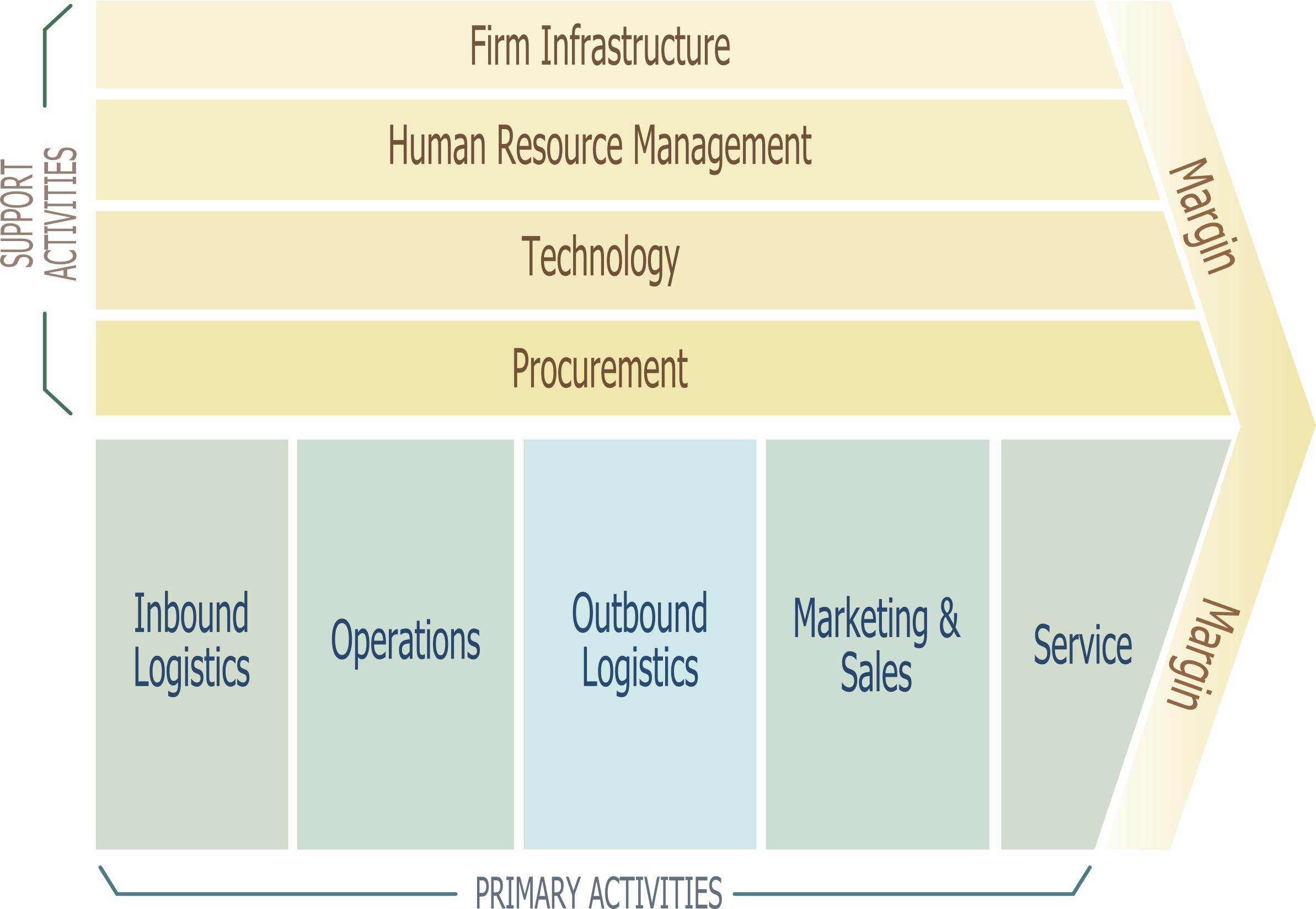
The business functions in blue are the primary functions of
the business in transforming the raw materials into a product and selling that
product to generate profits. The
functions labeled in brown support those primary activities and generally do
not add value in themselves. These are
also typically the first business functions to be outsourced. The difference between the cost of running
these activities and the final price is the profit margin. Each firm will have a different value chain,
but all will resemble this model.
The Value Chain for
Business English Training
Now, let’s take this model and apply it to Business English
training.

The raw material of BE is the English language, which is a
common good. It belongs to no one and if
you grew up in a native-speaking country you have it free-of-charge. Indeed, there are enough resources and
materials on the Internet that the language is available at no charge around
the world. Therefore, the main value of
the trainer is to determine which parts of this massive body of knowledge are
needed, organize that information, then transform it into a useful format for
learning, mastery, and performance.
Overall, the first three activities are determining what
to train, and the last two are how to train. These primary activities include everything
in training from using discourse analysis to determine key functions to
elearning. Additionally, materials
development includes more than simply course books and handouts, but also the
activities a trainer uses to instill knowledge, mastery, and performance.
Note: It can be argued
that marketing actually adds value but I doubt few trainers will be able to
develop a brand with enough mass to considerably change what a client is
willing to pay. For simplicity I have
left it as a supporting activity.
Why wages are so
low...
Jenny has a CELTA and works at a private language
school. She is given Business English
courses and travels to an accountancy for a 90 minute lesson every week. The school and the client have decided to use
a course book for the training. Jenny supplements
the material with some of her own activities and modifies some of the exercises
in the book to better fit the needs of the group. She conducted a short needs assessment at the
beginning to find out which parts of the book are more important for the
learners. She is not that familiar with
the company but she has read the company’s website and remembers some accounting from a
university class she took several years ago.
She is very active reading blogs and articles to find creative lesson
plans and activities to improve her teaching.
In the case above, Jenny is only one very small part of the
value chain (marked in red). The other
primary activities were done by the course book writers/publisher (they were
paid when the book was bought) and the brown support activities were done by
the school.
.png)
Let's imagine the market price for this type of training is €60
per hour. If Jenny gets a third of that,
she is lucky. Her limited needs
assessment is added value and her addition of supplementary materials
helps. Most likely, she will receive a
bit more than her peers at the school who do not do this. But her professional development is limited
to improving her training delivery. This
is admirable, but does nothing to increase her wages. She is already receiving this portion of the
value chain.
Susan has a CELTA and is a freelance trainer. She started with general Business English
courses but then started focusing on finance.
Every two weeks, she attends a local networking event for business
leaders in the area. At one event she
meets a partner of one of the local accounting firms. She talks about her business a little and how
she has worked with other firms in the field and has seen good results. She has developed a corpus of financial
English and writes her own materials based on common functions and skills. Prior to the training, she researches the
firm and meets with a few of the partners to conduct a top-down needs
assessment. Then she conducts a
bottom-up needs analysis with the participants.
She designs a course proposal and negotiates with the accountancy. She then develops the materials and conducts
the training. Every month she invoices
the firm and sends a progress report to the partners every quarter.
Again for simplicity, let’s assume that Susan is also subject to
the same market rate for Business English training at €60 per hour. But in this case, Susan collects every cent
of the value chain. Additionally, she is
developing skills and tools which enhance her ability in other activities. Over time, she becomes more proficient at
billing, reporting, marketing and sales.
She checks on activities and methodology but is more interested in
workplace discourse, specific needs in the field of finance, etc. So, she does not ignore how she
teaches, but spends an equal amount of time on what she teaches.
In the next chapter we will discuss the relationship between qualifications and the value chain to see how hitting the books will help increase wages.
Subscribe to:
Posts (Atom)