Pages

Thursday, June 13, 2013

The Value Chain of Business English Training - Chapter One

There are several parallel conversations going on in Business English training at the moment.  The first is about money.  The second is about qualifications.  The third is materials.  There are certainly other issues, but I’ll limit it to these today.

The purpose of this article is to link these three threads and to give a few signposts out of the circular debate.  The link to all of these lies in business theory.  As Business English trainers, I hope this is familiar, but perhaps the application to our own field is new.

Porter’s Value Chain

Perhaps the most well-known name in business theory is Michael Porter.  In 1985, he presented the value chain, which explains the difference in price between the inputs and output of a business.  I think the clearest graphic of this process is from Wikipedia which shows a notional value chain for a manufacturer.
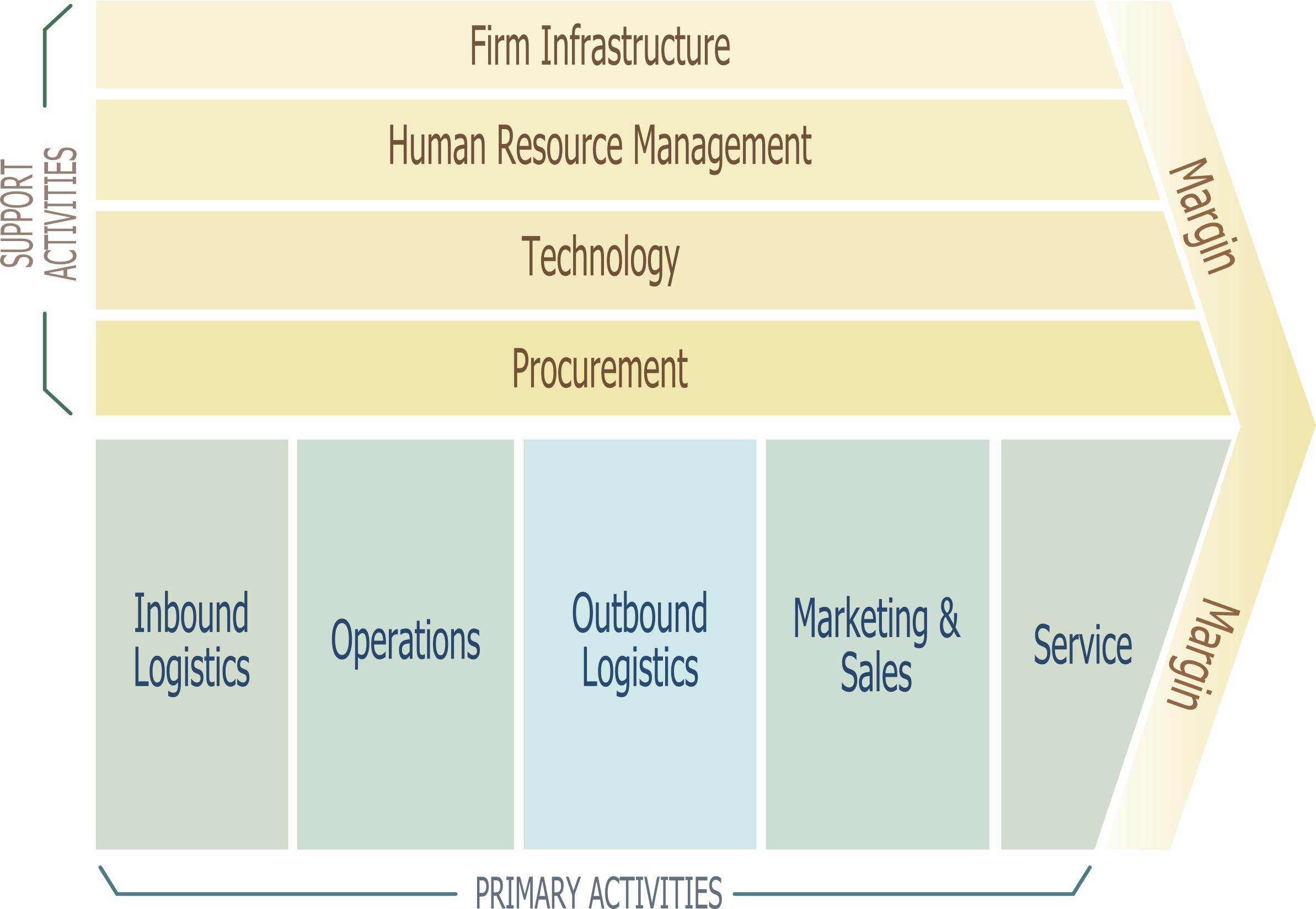

The business functions in blue are the primary functions of the business in transforming the raw materials into a product and selling that product to generate profits.  The functions labeled in brown support those primary activities and generally do not add value in themselves.  These are also typically the first business functions to be outsourced.  The difference between the cost of running these activities and the final price is the profit margin.  Each firm will have a different value chain, but all will resemble this model.

The Value Chain for Business English Training

Now, let’s take this model and apply it to Business English training.


The raw material of BE is the English language, which is a common good.  It belongs to no one and if you grew up in a native-speaking country you have it free-of-charge.  Indeed, there are enough resources and materials on the Internet that the language is available at no charge around the world.  Therefore, the main value of the trainer is to determine which parts of this massive body of knowledge are needed, organize that information, then transform it into a useful format for learning, mastery, and performance.

Overall, the first three activities are determining what to train, and the last two are how to train.  These primary activities include everything in training from using discourse analysis to determine key functions to elearning.  Additionally, materials development includes more than simply course books and handouts, but also the activities a trainer uses to instill knowledge, mastery, and performance. 

Note: It can be argued that marketing actually adds value but I doubt few trainers will be able to develop a brand with enough mass to considerably change what a client is willing to pay.  For simplicity I have left it as a supporting activity.

Why wages are so low...

Jenny has a CELTA and works at a private language school.  She is given Business English courses and travels to an accountancy for a 90 minute lesson every week.  The school and the client have decided to use a course book for the training.  Jenny supplements the material with some of her own activities and modifies some of the exercises in the book to better fit the needs of the group.  She conducted a short needs assessment at the beginning to find out which parts of the book are more important for the learners.  She is not that familiar with the company but she has read the company’s website and remembers some accounting from a university class she took several years ago.  She is very active reading blogs and articles to find creative lesson plans and activities to improve her teaching.

In the case above, Jenny is only one very small part of the value chain (marked in red).  The other primary activities were done by the course book writers/publisher (they were paid when the book was bought) and the brown support activities were done by the school.


Let's imagine the market price for this type of training is €60 per hour.  If Jenny gets a third of that, she is lucky.  Her limited needs assessment is added value and her addition of supplementary materials helps.  Most likely, she will receive a bit more than her peers at the school who do not do this.  But her professional development is limited to improving her training delivery.  This is admirable, but does nothing to increase her wages.  She is already receiving this portion of the value chain.

Susan has a CELTA and is a freelance trainer.  She started with general Business English courses but then started focusing on finance.  Every two weeks, she attends a local networking event for business leaders in the area.  At one event she meets a partner of one of the local accounting firms.  She talks about her business a little and how she has worked with other firms in the field and has seen good results.  She has developed a corpus of financial English and writes her own materials based on common functions and skills.  Prior to the training, she researches the firm and meets with a few of the partners to conduct a top-down needs assessment.  Then she conducts a bottom-up needs analysis with the participants.  She designs a course proposal and negotiates with the accountancy.  She then develops the materials and conducts the training.  Every month she invoices the firm and sends a progress report to the partners every quarter.

Again for simplicity, let’s assume that Susan is also subject to the same market rate for Business English training at €60 per hour.  But in this case, Susan collects every cent of the value chain.  Additionally, she is developing skills and tools which enhance her ability in other activities.  Over time, she becomes more proficient at billing, reporting, marketing and sales.  She checks on activities and methodology but is more interested in workplace discourse, specific needs in the field of finance, etc.  So, she does not ignore how she teaches, but spends an equal amount of time on what she teaches.

The end result is that Jenny spends three times the amount of time in the training room as Susan.  That does not mean Susan works less, but she is doing different things.  Additionally, Susan is developing skills which will help her earn even more money in the future, whereas Jenny is continually improving an activity she has already tapped (training delivery).

In the next chapter we will discuss the relationship between qualifications and the value chain to see how hitting the books will help increase wages.

The Value Chain of Business English Training - Chapter Two: Qualifications

How qualifications add value...

The ELT community and Business English in particular has rightly made the link between qualifications and earnings, but in the wrong way.  It is useful look at a few qualifications and what they really mean.  

First, the basic qualification to be a teacher is possess more knowledge about something than the learners.  This means that every English speaker in the world is qualified.  There is no way to create a barrier for entry.  In fact, there is probably no other field with a lower barrier of entry.  Providers will always hire from this pool and provide them with everything they need to conduct training.

A qualification demonstrates to clients a certain level of expertise in certain parts of the value chain.

The basic qualifications are a TESOL certificate or CELTA.  This shows a certain ability to conduct training.  In Jenny’s case (see previous post), she able to work for the private language school because of this certificate, probably earns a bit more, and has some more freedom in designing materials and activities.  But in essence, the certificate now really belongs to the school.  They will be able to gain a slightly higher price from the client because they offer a certified trainer.

Now, if we talk about university degrees in (Applied) Linguistics, this demonstrates a deeper knowledge of the subject matter.  The corresponding assumption is that these qualifications improve the ability to determine what part of language to train.  This is certainly valuable as fields like pragmatics emerge within Business English.  But to say that they will immediately translate into higher training rates is a bit exaggerated.  They will only allow the trainer to better identify certain skills needed, divide those skills into sub-skills, and prioritize them.  For example, within the main skill relationship building we have the communication skill of small talk.  One linguistic sub-task of small talk is showing empathy.  A trainer with a degree in Applied Linguistics will be better able to identify this sub-skill and develop linguistic strategies for performing this sub-skill.

If we turn to Education as a field for certification, this demonstrates a deeper knowledge of the how to teach.  This will show that the trainer is an expert in creating learning materials and delivering the training in a way that is easily absorbed.  A degree can be very useful, but it is important to remember that it supports only certain elements of the value chain.  The trainer may design and conduct outstanding training, with high learning and performance results, but which is also only marginally relevant.

The DELTA and MA TESOL could be considered a blend of these two fields in the context of ELT.  They appear to do a better job of improving all aspects of the value chain to a certain degree.

The final qualification would be a degree or certification in a special field, such as law, engineering, or finance.  This will typically help when defining the skills needed.  These degrees solely support the what side of the value chain.  But it is unclear which qualification would be most useful.

When in doubt, ask the customer...

I had a meeting with one of my clients a few months ago and we talked about an ongoing training project I am working on.  He is a manager in procurement and pays my bills.  If he is not happy (either with me or because the participants complain) I will lose my job.

During the meeting I started talking about my approach to training (materials light, maximum feedback, skills focused) and he cut me off. 

“I don’t need to hear about how you do things.  You are the trainer and you know the best way.  I am interested in making sure we are training them things that will help them do their job better.  We aren’t here to teach them ‘English’.  They should bring that with them when they are hired.”

Translation:  I see that you are an experienced and qualified trainer.  I’m assuming you know what you are doing and I have not heard anything to make me doubt that.  For me, the main value is the focus of the training.  Are you training them in skills which are applicable to their daily work, or are you sitting in there talking about grammar?  I’m not interested in how you train, rather what you train.

This client is not alone.  Most of my clients are more worried about the content than the approach.  From the client’s side, the methodology debate is a non-starter.  They do not care if you know Dogme, task-based learning, or the like.  What they really care about is whether you are training them things they can do in their job.  The method is only important in that is achieves results and satisfied learners.

This leads me to believe that qualifications which support needs assessment and skill analysis are more profitable.  There are several examples of this.  Some trainers are doing quite well with a law degree.  Evan Frendo is an engineer and mentioned how useful this has been in a recent interview in Business Spotlight.  On the other hand, ELT specific degrees and qualifications seem to only marginally pay off because they do not necessarily resonate with the client.

This what worries me somewhat about the planned teacher qualification scale being drafted by organizations such as British Council and Göthe Institute.  These scales will be designed based on their business model of teacher, DOS, and  director or on the university system.  In my experience at a private language school, the client was not willing to pay significantly more for a DELTA trainer than a CELTA trainer.  On the other hand, they easily handed over a premium from a trainer with a field specific qualification like a project management certificate or business degree.

In chapter three we will discuss ways we 'give away' parts of the value chain and limit our income.

The Value Chain of Business English Training - Chapter Three: Outsourcing

Outsourcing value...

In the first chapter of this epic post, we discussed the value chain of Business English training.  In the second, we looked at how qualifications can add to that chain.  In this chapter, we will look at how we outsource various elements.  In essence, this is the ‘follow-the-money’ of ELT.

A few years ago, one of the companies I work for decided to outsource their IT services.  As a support activity, it was not directed related to generating value for the company’s customers.  The provider who took over the services basically said, “Look, this isn’t your core business, you aren’t experts in it, and if you let us take it over, we will do it cheaper and faster.”  The company agreed and suddenly all the IT services came from a different company... for a fee.

We do the same thing with our support activities.  I hire a tax consultant to support my operations.  Sure, I could file the monthly VAT returns myself and produce all the financial statements, but that is not my core business and they can do it cheaper and faster.  I hire a part-time secretary to do all my invoicing and billing.  I have outsourced my administration.

We can take this a step further and outsource our marketing, sales, and infrastructure as well.  By working for a language school, we are sacrificing a certain amount of the income.  They control that side of the value chain.

Materials...

But the real outsourcing comes from using published materials.  For this post, we will ignore the “how to teach” books and instead focus on the learner-centered materials.  Just like the IT example, course book writers and publishers basically say, “We know which skills the learners need, we can break them down into sub-skills, and we can present this knowledge in a useful way.”  In many cases, they are right.  Published materials work, I have no doubt.

However, I have certain reservations about outsourcing my primary value added activities.  I can see that others feel the same way.  Often this comes in the form of half steps.  For example, a trainer may conduct a needs assessment and even go so far as to analyze those needs into sub-skills.  Then they will photocopy a range a published materials to fulfill those sub-tasks.  This effectively cuts the publisher out of the value chain and leaves more for the trainer.  In reality, the school may encourage this behavior because they are actually pocketing the difference.  They are telling the company that they create customized courses (which are sold at a slight premium) but are only paying the trainer for the value added of training delivery.

This is one of the most delightful ironies of the ELT field (Business English included).  Many of the same school directors, directors of study, and teacher trainers who are developing their career to write for a publisher are encouraging or ignoring ubiquitous copyright infringement at their institutions.  But it all makes sense from a business point of view.

The key to this system is the assumption that the client and the learners do not know the difference.  And in many cases they don’t.  However, as someone who writes all of his own material I can say that there is a HUGE difference in value to the customer when you say, “I did a corpus analysis of your field and I wrote this exercise booklet on 40 verbs that are common in your field.”  As long as the materials I write are pedagogically sound and support the sub-skills I am looking to train, they add considerably more value than photocopying published materials.

This weekend the BESIG is hosting a free online conference all around materials.  The talks they have lined up appear to address this issue head on.  I believe that writing materials for clients is one of the greatest values I provide.

The key to outsourcing the value chain is knowing what to leave to others and when.  In general, most companies do not outsource their primary activities.  In Business English training, however, sometimes we may need to focus only on the things we are paid to do.  If I am only allocated the training delivery step, I will expect the school to provide me with a needs analysis, an assessment tool, and materials for the training.

But in reality, there are many trainers taking less pay than the effort they are putting in.  In thenext chapter we will look at how to gain more control of the value chain.

The Value Chain of Business English Training - Chapter 4: Getting Paid

Building your share of the value chain...

We all want to get paid for what we are worth.  In chapter one, we saw how the trainer Jenny had nearly maximized her wages because she was adding only limited value to the training.  In fact, there is a cap on each step in the value chain.  For example, you might do the very best needs assessment ever, but a customer will only pay so much for that step.  You might also be the best materials writer in the world, but there is still a cap.

If we combine this with qualifications, it shows that they are subject to diminishing returns.  In other words, a Master’s in Education will not change my income that much as a trainer because I may have already reached the limit of what customers are willing to pay for materials development (including activities) and training delivery.

So the key is to take over more elements of the value chain, not to continually develop and market one step.  This means the trainer will have to do more work.  But before we look at four ways to increase value added we need to examine a fact about the consulting/training business.

Customers always remember the first price you charged them.
- Joe Rei, Management Consultant

Rates are sticky.  It is extremely difficult to go to a customer and ask for higher rates.  But we can never stop developing our product.  Furthermore, a training product needs testing, review, and improvement before it can be sold.  That leads to the first value building method.

1.  Test something with customer A and sell it customer B

Jenny is running her weekly business course at the accountancy, but she is unhappy with the pay.  She decides to use corpus tools to make her own materials about accounting and the needs she has identified.  She goes out and learns how to use the software and collects the texts.  It takes her many hours of work, but she eventually writes three vocabulary exercises and a role-play based on her data.  She uses the materials in class and sees that there are a few problems.  She corrects them and writes a few more.  She is not being paid for any of this effort.

When the class ends, she gets great feedback and the school wants to use her for another course focusing on financial English.  Jenny speaks with the director and says, “I can develop my own materials for the course.  I’d be happy to show them to you prior to the training.  But this takes considerable effort and I would need to be paid for it.  I believe the customer would be willing to pay for materials if they knew that they were specific to their company.  I think it would be fair to receive the materials budget for this course.”

2.  Take on the responsibility... go freelance

Mike Hogan has talked about going freelance at conferences a few times and he is right on that it is more difficult, more rewarding, and can pay more than using the support of an institution.  This is the path I chose and I love it, but it is not for all.  I also had certain abilities in every step of the value chain before I started out on my own.  I am not a success story yet, but I believe I am on the right track.

When it comes to assuming responsibility for marketing, sales, and product development, a freelancer must be patient and have a certain confidence that sales will come.  I have been turned down for many more proposals and offers than have been accepted.  I have been rejected by far more prospective customers than I have won.  In general, I believe that it will be another 3 to 5 years before I am really able to maximize my value.

3.  Take a share of value from others

This is the traditional money making model in ELT.  Course book writers take a certain portion of the value for every student who uses their book.  Elearning sites charge a fee for their material and delivery.
I know some trainers who have won a customer and then hire other trainers to perform some of the training.  They keep a portion of the income for the sales work and admin side.  They may even keep a larger portion if they conducted the needs assessment and designed the training program.  Private language schools who hire freelance trainers generally follow this model.

This method is simply not for me, but that doesn’t mean it doesn’t work.

4.  Use synergy gains to increase value

Synergy gains are a business concept for when two companies working together will produce greater value than the sum of working individually.  In this case, I am talking about working with other trainers to ‘bundle’ services which has a higher price than individually.  For example, I worked in the past with a human resources development consultant here in Germany.  She was an expert in outplacement to help employees find a new job when they were laid off.  Her services were typically paid by the company the employees were let go from.  We worked together in special cases to combine her training and support with my English training.  Together we were both able to charge higher rates.

For me, this is the ideal situation.  I am always looking for talented partners who have complementary skills.  By utilizing our various talents, we can approach customers with a larger added value.

Conclusion

At the end of the day, there is little we can do about the business model of Business English training.  The barriers for entry will always be exceptionally low.  And there will always be a place for under-qualified trainers in the marketplace.  I believe the best qualification to differentiate a trainer is something beyond the ELT field (assuming they have at least the minimum teaching certificates).  I also think writing materials is key to adding value to the training and makes a significant impact on clients.  Finally, there are several ways to increase rates within the field, but these methods must follow business principles.  I don't think following an academic career model attracts customer.

Monday, May 13, 2013

Giving Learners Control of Skills Training

As I am sure everyone is aware, there are two types of grammar:  prescriptive and descriptive.  Prescriptive is a set of rules which standardize grammar and determine whether something is right or wrong.  Descriptive is a study of language as it actually is used to deduce a set of grammatical commonalities.

It looks like most teachers agree that teaching the descriptive grammar is more useful for the learners as communication trumps some arbitrary form of correctness.  Why, then, are we teaching prescriptive skills?

Prescriptive Skills

There is no one right way to lead a meeting, give a presentation, engage in a negotiation, write an email of request, and so on.  Research on discourse and the field of pragmatics help show something we already know... we change our language as we perceive the situation.  This goes way beyond register and whether something is formal or not.

Some have argued that language teaching should be more contextualized to ensure pragmatics are included and students gain the skills needed to alter their language to fit discourse.  This makes perfect sense.  But sometimes I see materials which have "Key Phrases for Meetings" or how to write a formal complaint.  This, however, adds a certain set of prescriptive rules for communication which may not always be appropriate.

A classic example of this are dialog structuring activities which allocate select phrases to students A and B to be used in a 'language flowchart'.  The context is provided through detailed role-plays and case studies.  But often I feel that these violate my "Train as you Fight" motto I picked up in the military.  In other words, the training context should be as close to real-world conditions as possible - modified only for ability.  This same approach is echoed repeatedly in other training fields when they discuss transfer design.

"Take this three times a day to cure bad meetings."
Descriptive Skills

So, if the intent of skills training is to introduce as much realism as possible, it is best that it includes contextual concerns.  This includes culture and relationship of the interlocutors, the communication conventions (e.g. structure, templates, etc.), intent, and desired perception.  When we add all of these together, it is clear that there is no one best way.

The problem is the complexity of all this.  How are we supposed to find resources for all of this information? How can we possibly create a list of phrases for meetings in every context?  This would be simply unworkable.  No doubt we as a profession have tried.  One day, I would like to compile all the useful phrases for small talk in my library and see how we are doing.


Hard to describe but it looks like art to me.
The answer is two-fold.  One, we have to accept complexity.  We have to understand that by describing something we inherently limit it.  By describing an effective presentation, we make all the other methods wrong.  So what happens if one week we do presentation training and the next week we watch a TED talk?

The second part of the answer is accept that we don't know everything.  The key to skills training is the students themselves. They can quickly offer all the contextual information we need and tell us what success looks like.

Elicited Rubrics

A key element of performance-based training is the assessment rubric.  I have written a bit about performance assessment in two earlier posts (lessons from the military and assessing quality).  Judith Mader has done extensive work on performance-based assessment in the field of pre-experience learners.  She's even written a book about it.  At the heart is designing a list of criteria and then evaluating whether the student met each of those criteria during the task.

For example, a very simple performance rubric might look something like this:

Note:  This is prescriptive...
So, my goal in skills training to develop a rubric which will not only assess the training event, but also give the learners a series of steps to successful fulfill the task.  It also provides ample room for teacher and peer feedback.  These rubrics can be extend to the right to include grading scales and exact performance measures.

Here is an example from a university for a written paper:


So, how do we create rubrics without assuming too much about context?  The answer is sitting right in front of us.  They know the interlocutors.  They know the context.  They know what they like and don't.  Let's ask  them.  By having an introductory conversation about the skill in context we can define the performance criteria together.  Furthermore, they have a stake in the process and are more likely to provide constructive feedback and transfer the skill to the workplace.

Lesson Idea 1 - Email to Request Information

With this B1-B2 class I had already conducted a needs analysis based on the communicative event, so I knew that requesting information from fairly distant colleagues was a common task.  The lesson was only 60 minutes so I needed to keep the frame fairly small.

I started the lesson with 10 minutes of small talk and catching up.  Then we came to the point.

Today we are going to write an email to request information.  You have just received an Outlook invitation for a meeting in Munich on May 29th (Munich is about 2 hours away).  You recognize the name of the organizer, but you don't know him.  We are going to write an email to find out more about the meeting and if we should accept.  I haven't included more information because I want you to fill in the details.

Then I created a mindmap on the board with "Request for information" in the middle.  Above it I wrote "Preferred" and below I wrote "To avoid".  We started by discussing things that should be included in the email (preferred).  We then added items which should be avoided.  As the moderator of the discussion, I made sure is encompassed linguistic as well as topical issues.

Then, they wrote the emails and I wrote one as well.  I ran to the copy machine and make copies for everyone.  While they were reading I marked the emails for corrections.  We then compiled phrases used by the various students to be used later.

This simple mindmap exercise can be done with any communicative event.  What makes a good meeting chairperson?  What should they avoid?  What is good when describing a presentation graphic?  What should we not do?  The teacher can help break it down to sentence level if needed.  But it is important that they provide the contextual information.

Lesson Idea 2 - Presentation Rubric

Above you have seen a prescriptive rubric for a presentation introduction.  I have also made such charts with the class.  Below is a lesson example from a tax consultancy.

Today we are going to practice starting a presentation.  You have been asked by the company to give a presentation to your client about new regulations on value-added taxes in Germany.  You will have to inform them about the changes so that you can file the VAT returns quickly and correctly.  Today we will practice only the introduction of the presentation... what you will say at the start.  So, let's start by talking about what is important to have in this introduction.

After the conversation, the rubric looked like this.


So, as a trainer, I knew what to listen for.  In this case, I actually put this rubric on the projector (I had a flipchart to brainstorm and projector to record) so that the small groups could give peer feedback.

Conclusion

At the end of both of these lessons, I left ample time for feedback and a chance to discuss what had happened during the training.  These rubrics can also be used for review or building to a larger task.

Prescribing a most effective way is not always bad.  Indeed, I use it often for certain groups.  For pre-experience learners there is little alternative.  For wide ranging need sets, it is sometimes acceptable.  And I will also use it for remote training (e.g. eLearning and email coaching) where feedback is not possible.  But this type of training is the lowest common denominator.  It should be better.

The point is, if we profess to know the best way to perform a business skills, we place our learners at a disadvantage.  Just like a prescriptive grammar teacher creates students who cannot operate in the real world, we can do the same with skills.  We need to accept the complexity of our learners' world, acknowledge that neither we nor our resources know everything, and let our students define the context.  Using the communicative event analysis provides us the tool for developing the framework materials, but it is up to the learners to take that step further to outline the rubric.  Naturally, the trainer is contributing every step of the way, but leading by questions... not by prescription.


Thursday, April 11, 2013

IATEFL Liverpool - What Business English Can Teach the Rest of ELT


Over the past several days I been listening to interesting ideas from around the world from the General English community (I haven’t attended any BE talks).  The larger world of ELT is full of amazing people.  But I also see areas where common practice in Business English training might help our colleagues.  So, here they are...

Relevance
Lessons should matter to the students.  I am still fairly fresh to this profession, but apparently this idea of relevance is quite new in the theoretical approaches.  Surprisingly, this focus on making lessons engaging, unique, and useful to the learners in the class appears to be a wave in ELT.  In fact, it is so intuitive that I hear some BE trainers talking about how they have been doing this on their own for years just by feeling but without ELT recognition.  Suddenly, research appears to be validating what has been going on for a long time.

In other words, many Business English Trainers are developing methods and lessons which go far beyond anything being presented at IATEFL.  When it comes to focusing on the learners I see hesitation in the larger ELT community.  Dogme is the perfect example. 

I went to a popular talk yesterday by Luke Meddings and Burcu Akyol on the areas of overlap between unplugged and connected teaching.  Mr. Meddings started by saying that Dogme was now 13 years old, but then felt the need to (re)outline its principles at length.  Dogme’s principles can be distilled into one word... relevance.  He seemed to be answering critics of the approach through his talk.  I was asking myself why... hadn’t Dogme arrived? Wasn’t it accepted as a valid method of the teaching, at least by some communities?  But I guess not.  So apparently relevance of teaching is doubted by many.  On the other hand, when I met a BE Trainer from Berlin in the next session he said, “Well, [Dogme] is really a non-debate, isn’t it?”

Just to clarify the concept of relevance.  I am using this in many ways to include...
  • Content should relate to the learners’ lives in a meaningful way.
  • The language should be brought to where they are and integrated into their lives.  In BE we are often in-company, dealing with real world events.  For school age learners this means taking the language into their social network spaces, for example. 
  • Learners are the center of the lessons, discussing their thoughts, expressing their real selves through English.    
  • Teachers should focus on skills and language the learner needs, both now in and in the future.

Finally, BE trainers take it for granted that no publisher could ever write a fully relevant course book.  This is why we so rarely use them unless standardization is required.  But I think we can help share our experiences in designing and guiding relevant training. 

Customer Service

The idea of stakeholders and customers seems to be lost.  Overall, I tend to hear phrases like “get your students to...” and “make/have your students do...”  But I have yet to hear anything like, “If your students want/need/lack, do...”

But the latter is the everyday reality of Business English Trainers.  In conversations with other trainers here we speak about flexibility and accommodation all the time.  We are so focused on the customer that we are a chameleon of approaches and methods.  But the talks here in Liverpool show that categorized teaching persists.

The second part of this is many teachers fail to realize the customer / stakeholder relationship of their profession.  While we speak about satisfying the needs of the learner, manager, HR, and procurement all the time, I never hear parents, children, ministries, and school administration being mentioned (when they are, it is merely as a barrier to something the teacher wants to do).  These concepts are actually so closely related we need to have an expert step up and compare this.  Overall, I feel we have been successful at balancing these interest groups but many of the complaints in General English show substantial conflict exists in their field.  We can help.

(Section below added April 12)

On this point, I attended a talk from the British Council on a project to help public school teachers in former East Germany improve their English.  The project director gave the audience a set of lessons learned from the challenges they faced dealing with the education ministry, the teacher training institute, the teachers themselves, and the trainers.  While the project was and continues to be successful, there were several contractual and coordination issues which caused strain on the various relationships.

I believe that someone working with companies to design and implement Business English training would have been a great addition to the BC team.  Many in the field are adept at conducting stakeholder analysis and identifying the tensions between expectations.  I had the impression that BC was picking up some of these lessons by trial and error.  Without question, the organization has a depth of talent in teacher training, but many BE trainers know that managing stakeholder expectations is a key ingredient.  In essence, because we work with businesses, as businesses, and talking about business, we think more like businesses.

Innovation

I have been attending various talks from the SIGs this week.  One was from Sandy Millin.  She is a popular blogger, recently finished a DELTA (or is close to finishing), and one of the inspirational people I follow online.  She presented a very useful overview of International House Newcastle’s Personal Study Programme.  I was interested because it was part of the Learner Autonomy SIG day.  The guided self-study program IH has set up is great but it is still a work in progress.  I think BE trainers may even have larger issues with learner autonomy than General English self-funded (or parent-funded) learners.  I think we can add our experiences to the Lerner Autonomy discussion.

Ms. Millin did a great job.  In fact, she displayed the best presentation skills I have seen at the conference so far (well-rehearsed, clear message, calm in voice and manner).  Her intent was to share and spread.  Her audience, however, was clearly expecting more.  She faced a series of challenge and opinion questions at the end (prefaced by politeness of course).  As I was leaving the room I heard two conversations about how her ideas would not work.  The best of these was how the teachers in the self-study room had not received the proper training as tutors.  The participant’s school had instituted something similar and they had received “loads of training” on tutoring.  I still can’t quite understand.  If a qualified English teacher (at DELTA level in this case) is not suitable as a tutor, who is?

The point is... many in ELT do not understand innovation.  Innovation is the formulation of an idea which is feasible, desirable, and adds value.  IH Newcastle has a profitable and feasible idea which helps learner autonomy.  The desirability from the learner’s side was left somewhat unanswered (the price/time was bundled into overall order), but Ms. Millin was clear that motivation is a work in progress.  This is innovation in a simple form.  It is a small, but useful, step toward learner autonomy.

Private language schools (like IH) are businesses and their product is education.  Therefore, they need to consider new ideas with a business mindset.  Even public schools and universities are pseudo-businesses.  They provide education and must demonstrate value.  In Business English we think about this all the time.  How can I differentiate myself through approach and methods?  Will my clients find this blended learning tool useful and desirable... and how should I charge for the time to run it?  And so on.  But in the larger world of English teaching, the thinking is different.  New ideas are prodded and poked and we dismiss them on the backs of completely frivolous concerns.  Instead, let’s change our perspective on innovation.

So, this post does include some sweeping generalization about both ELT and Business English.  I know the reality is much more complex.  But looking down at Liverpool from the top of the Ferris wheel next to the center... this is what I see.  I learn every day from talented teachers in the ELT field like Mr. Meddings and Ms. Millin.  But I think as BE Trainers, we can and should give something back.  I think next year I’ll submit a presentation.

Wednesday, April 10, 2013

IATEFL Liverpool - Three People to Follow


During my first 36 hours in Liverpool there have been three people truly worth following and using their expertise for use in the Business English classroom.  In no particular order...

Sacha Euler

Based in Trier, Germany, Mr. Euler is the scholarship winner from the new Pronunciation SIG for this year’s conference.  His presentation on the implementation of connected speech phonology was simply outstanding.  While those unfamiliar with phonology and its terminology might have been a bit lost by the jargon and pace of the presentation, his research and thoughts are fantastic.  He bridges the gap between research and application in materials and lessons.

As virtual meetings become the international communication method of choice, pronunciation and listening comprehension play a vital role in effective communication.  His research and application in materials is groundbreaking, yet simple to adopt.  His methods, while presented as a tool to understand native speakers, could also help our learners with difficult accents and self-regulation when speaking with other non-native speakers.  I can only hope that Mr. Euler will present again, or at least spread his knowledge on the Internet.  I wish I could provide links... in the meantime we can use authentic listening resources (and semi-authentic like Collins English for Business:  Listening) combined with connected speech resources to help develop this training.

Leo Selivan

Mr. Selivan is a General English Teacher in Israel with the British Council.  At first glance, this may not appear to be the profile of someone with much to say on Business English.  But his work on the Lexical Approach is so useful it would be irresponsible to neglect his ideas when encountering vocabulary during our lessons.  Since I focused on how I am dealing with lexis in my lessons I have seen significant improvement in noticing, recognition, retention, and production.

I highly recommend following him on Twitter, reading his blog and archive, as well as this post from Carolyn Kerr based on his similar talk at the TESOL France conference last year.  Although I think all teaching approaches should be handled in moderation and with a pinch of skepticism, I am looking forward to reading the treatises on the Lexical Approach (book 1/book 2) by Michael Lewis.

Jeremy Day

For me, Mr. Day was simply a name I commonly saw on the bottom of ESP books.  I thought he was merely a subject matter expert in two or three niche markets.  It was not until recently that I discovered his blog (notice related posts at bottom) which appeared to be abandoned since 2011.  But when I started reading the blog (I tend to read blogs in their entirety, like books) I saw how really flexible and trailblazing he is in Business English.  Here in Liverpool I just had the chance to see him present in person.  His presentation on ESP course design is excellent.

His talk on two approaches to course design was spot on and echoed (and predates) much of what we as BE trainers are doing... teach to the communicative event, do not treat linguistic competency as a linear process.  Mr. Day expressly stated that both teaching approaches are valid, but it is clear for me that in in-company situations the targeted training is often the way to go.

Since 2010, he has been working with English 360.  But this is recent news to me and caused me to go back and take a look at their product.  I still think it is the best blending learning site for BE trainers on the market.  The concept of plug-and-play resources to design your own blended learning course is great.  I also like the activity variety and interface.  Finding appropriate resources is a bit clunky and takes a considerable amount of search and clicks, but it is definitely worth a look.  They continue to host a wide range of CUP materials and I see that the user-generated and non-publisher materials are growing.  This is great news.

In total, these three men (coincidentally all male) have made my first two days at the conference completely worthwhile.  They may consider their ideas only a drop in an ELT ocean (this conference has that effect), but they can have a real impact on our BE training.